What’s Changing in Dubai’s Vape Market? Rules, Retail and Consumer Trends
 By Vaping Dubai•25 October 2026•11 min read
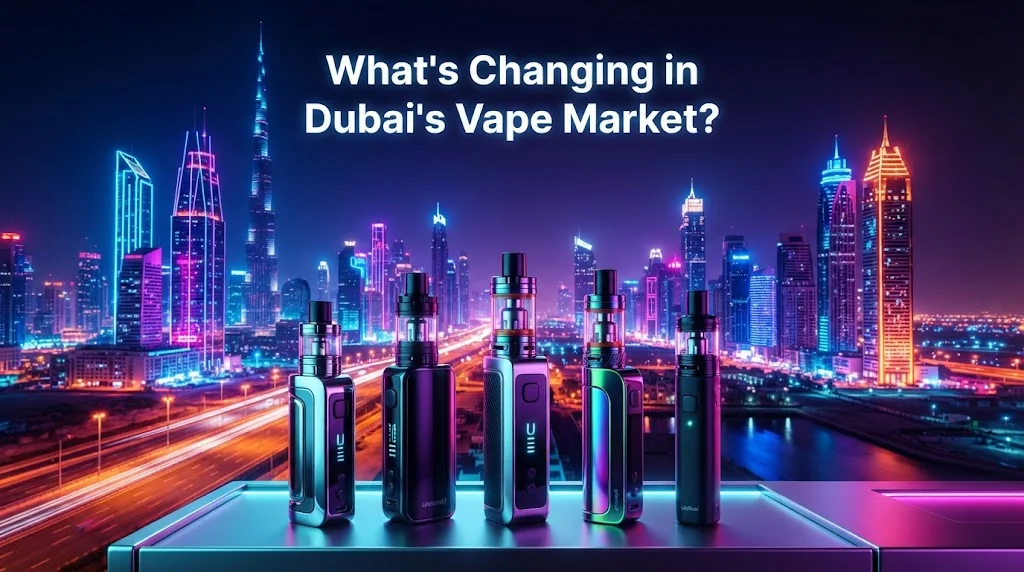
Dubai’s vape market is shaped by more than the products displayed in shops or listed on retail websites. Regulations, product standards, taxation and retail compliance all influence how this market operates. For anyone researching the vape market in Dubai, understanding these factors provides a clearer picture of the environment in which retailers operate and consumers encounter product information.
That broader picture matters because changes in one area can have implications for another. Tax rules may affect how excise prices are calculated, while product requirements influence what businesses must verify before placing goods on the market. By looking at regulations, retail practices and consumer information together, we can better understand what is changing across Dubai’s vaping retail landscape and which developments deserve closer attention.
What Shapes Dubai’s Vape Market Today?
The Role of Retailers and Specialist Vape Shops
Retailers play an important role in connecting manufacturers, distributors and consumers. In Dubai, specialist shops operate within a wider business and regulatory environment, while online retail introduces additional considerations around product listings, transactions and customer information. The presence of physical and digital sales channels does not mean every business operates under identical conditions, as requirements can depend on the activity and the products involved.
These differences make retail compliance an important part of understanding the vape market in Dubai. A business must consider more than its product catalogue. Its permitted activities, sourcing arrangements and applicable product requirements can also matter. Dubai Municipality publishes technical guidance for establishments selling tobacco and smoking supplies, including electronic cigarettes and related goods. This provides a useful starting point for understanding the local retail framework.
Product Standards, Labelling and Market Access
Retail operations are closely connected to product standards because the availability of a product does not, by itself, establish that it meets every applicable requirement. Product conformity, labelling and supporting documentation can all form part of the regulatory process. The exact obligations depend on the product category and the rules that apply to it, so businesses should consult the relevant authorities rather than rely on general industry assumptions.
This is also why product information deserves attention beyond the packaging itself. Clear labelling and reliable documentation help businesses identify what a product contains and which requirements may apply. For consumers, they provide information that can be checked rather than relying entirely on advertising language. Together, these considerations show how product standards and retail practices contribute to the way Dubai’s vape market is organised.
How Are UAE Regulations Affecting Vape Retail?
Licensing and Compliance Requirements for Retailers
A business operating a vape shop in Dubai needs to understand the requirements associated with its particular commercial activity. Dubai Municipality provides a permit service for establishments selling tobacco and smoking accessories, while the relevant trade licence and other approvals depend on the business activity and applicable rules. This means that opening or operating a retail outlet involves more than securing a commercial location and arranging stock.
The practical implications extend to how a business manages its operations over time. Retailers need to establish which approvals apply, keep relevant documentation in order and ensure that their activities remain within the scope of their permissions. Requirements may differ between specialist outlets and other retail businesses, so a general description of a vape shop in Dubai should not be treated as proof that every shop has the same permissions. Current guidance from Dubai Municipality and the relevant licensing authority should be checked before making specific compliance claims.
Product Restrictions, Age Requirements and Enforcement
Licensing is only one part of the regulatory picture. Product conformity, packaging, labelling and restrictions on sale can also influence which goods may legally be offered. These rules establish requirements for products and their distribution rather than leaving compliance entirely to individual retailers. Businesses therefore need to consider the applicable standards when sourcing products and reviewing the documentation associated with them.
Enforcement is the other side of that framework. Inspection and regulatory oversight help authorities assess whether businesses and products meet the requirements that apply to them. For readers trying to understand the rules, the key compliance areas to distinguish are:
- Retail permissions: Confirm the permits and trade activities applicable to the business.
- Product conformity: Check the relevant product standards and supporting documentation.
- Sale restrictions: Verify the age related and other restrictions that apply under current UAE rules.
- Regulatory oversight: Consult official notices and guidance for confirmed enforcement developments.
These areas are connected, but they are not interchangeable. A valid business licence does not automatically establish that every product meets every applicable standard, just as product documentation does not replace the permissions required to conduct a particular retail activity.
What Do Recent Tax Changes Mean for the Vape Market?
Understanding Excise Tax on E Cigarette Liquids
Taxation is another factor that helps explain the structure of the vape market in Dubai. The UAE applies excise tax to electronic smoking devices and liquids used in them, subject to the applicable legal definitions and rules. The Federal Tax Authority explains the relevant categories and tax framework through its official guidance, which businesses can use when checking their responsibilities.
The regulatory framework has continued to receive updates. In 2026, the Federal Tax Authority listed Cabinet Decision No. 137 of 2026 concerning the excise price for tobacco products and liquids used in electronic smoking devices and tools. The decision was issued on 24 July and published on 26 August 2026. Its appearance in the official legislation register is a reason to check the latest rules rather than assume that older explanations remain complete. The specific provisions and effective application should be verified directly in the official document before publishing a detailed interpretation.
Tax Rules Versus the Final Retail Price
Understanding an excise rule requires distinguishing the tax calculation from the final amount a customer sees on a retail listing. Excise tax is a regulatory and fiscal mechanism, and the applicable calculation may depend on the product category, the relevant excise price and the rules in force. A change to the calculation framework should therefore be interpreted according to the legal text rather than simplified into a claim that every product will experience the same price change.
The final retail price can also reflect factors beyond the tax calculation, including the commercial terms under which a business sources and sells a product. That does not establish that a particular tax update will cause a specific price increase or decrease. Such a conclusion would require supporting evidence. For a clear explanation, it helps to separate the main concepts.
| Topic | What it means |
| Excise tax | A tax applied to specified categories of goods under UAE law |
| Excise price rules | The legal method used to determine the relevant price for tax purposes |
| Retail price | The price presented by the seller, which should not automatically be equated with a tax calculation |
| Effective date | The date from which the relevant legal provision applies, as established by the official decision |
For businesses and anyone reporting on the vape market in Dubai, the safest approach is to consult the latest Federal Tax Authority legislation and excise tax guidance and the full text of the applicable decision. That avoids relying on outdated summaries or confusing an excise price mechanism with a fixed retail price.
How Is Consumer Awareness Around Vape Products Evolving?
Why Accurate Product Information Matters
Product information is an important part of consumer awareness because marketing descriptions and verifiable specifications do not always serve the same purpose. A product listing may emphasise appearance or features, while the underlying documentation may contain details about ingredients, nicotine content, warnings and the manufacturer. Understanding this distinction helps readers assess what a description actually establishes and what still needs to be verified.
Health information is another reason to approach product claims carefully. The World Health Organization explains that electronic cigarettes may contain nicotine and other potentially harmful substances, and that nicotine is addictive. The health risks vary with product characteristics and patterns of use, so broad claims that vaping products are harmless or risk free are not supported. Readers should assess health related claims against credible public health information rather than relying on promotional statements.
Online Listings, Product Claims and Transparency
As online retail becomes part of how consumers encounter product information, the accuracy of listings matters. A website may describe a product’s specifications, origin or contents, but those statements should be consistent with reliable product documentation and applicable requirements. Clear information makes it easier to distinguish a factual specification from an advertising claim, especially when several listings use similar language without providing the same level of detail.
This issue also connects online retail with wider consumer protection and compliance considerations. Dubai Municipality publishes technical guidance concerning electronic commerce for consumer products, while product specific obligations may be governed by additional rules. The guidance relevant to a particular vape product should be confirmed rather than assuming that every consumer product rule applies identically. In this context, an online vape shop in Dubai is part of a broader retail environment where product information, business permissions and applicable requirements all matter.
What Challenges Could Shape Dubai’s Vape Retail Landscape?
Compliance Monitoring and Non Compliant Products
Regulatory oversight matters because a rule only has practical effect when businesses understand their obligations and authorities can assess compliance. Inspections, documentation checks and other enforcement activities can help identify situations where products or retail practices do not meet the applicable requirements. However, the existence of inspections does not establish that non compliance is widespread across the market, and individual cases should be described within their actual context.
For this reason, any article discussing a specific enforcement event should use a dated, verifiable source from the relevant authority. It should identify what was reported, which authority was involved and what the published information actually establishes. If an official notice confirms that particular products failed to meet a requirement, the article can explain the significance of that finding without generalising it to unrelated businesses or products. This approach gives readers useful context without overstating the evidence.
E Commerce, Traceability and Regulatory Oversight
Online retail brings additional questions about how product information and supporting records are maintained. When goods move through manufacturers, importers, distributors and sellers, documentation can help establish their identity and relevant compliance status. Traceability is therefore a useful concept when discussing product oversight, although the exact records required depend on the applicable regulations and the role of the business in the supply chain.
These considerations also explain why digital retail should not be treated as separate from the wider regulatory framework. Online listings, product documentation and the seller’s permissions can each raise different compliance questions. Some obligations are established in current rules, while other developments, such as future changes to monitoring or digital systems, should be described as possibilities unless an official announcement confirms them. Keeping that distinction clear helps readers understand the current retail landscape without confusing emerging ideas with existing legal requirements.
What Should Readers Watch for Next?
The most useful developments to monitor are confirmed changes to UAE regulations, updates to Dubai Municipality guidance and new decisions published by the Federal Tax Authority. These sources can clarify whether a requirement has changed, when it takes effect and which products or businesses it covers. Checking the original publication is particularly important when a headline or summary describes a tax or regulatory change in broad terms.
Alongside those announcements, readers can pay attention to how official guidance explains product compliance, retail permissions and consumer information. These areas are directly relevant to understanding the vape market in Dubai, but future outcomes should not be predicted without evidence. A new decision may change a specific calculation or obligation without transforming every part of the retail landscape. Following verified updates makes it easier to distinguish meaningful regulatory changes from speculation or short lived discussion.

Frequently Asked Questions
What Rules Regulate Vape Products in Dubai?
Vape related retail and products are subject to applicable UAE laws and Dubai requirements. The relevant rules can cover business permissions, product conformity, labelling and sale restrictions. Check the latest guidance from Dubai Municipality and the relevant federal authorities for the specific product or activity.
Are Vape Retailers in Dubai Subject to Licensing Requirements?
Retail businesses must hold the permissions required for their commercial activities. Dubai Municipality provides a permit service for tobacco and smoking supplies establishments, including relevant electronic cigarette retail activities. The exact requirements should be confirmed with the appropriate licensing authority.
How Do UAE Excise Taxes Apply to E Cigarette Liquids?
The UAE excise tax framework includes liquids used in electronic smoking devices and tools. The applicable calculation depends on the current legal provisions and relevant excise price rules. Businesses should consult the Federal Tax Authority’s latest legislation and guidance for accurate details.
How Can Consumers Verify Official Information About Vape Products?
Consumers can consult relevant UAE government and regulatory sources for applicable product requirements and official notices. Product descriptions should not be treated as a substitute for authoritative documentation, and health related claims should be assessed against credible public health information.
Do Online Vape Retailers Have to Follow UAE Regulations?
Online retail must be assessed under the rules that apply to the business activity and the products being offered. Relevant requirements may include business permissions and product specific obligations. Sellers should confirm the current requirements with the appropriate UAE authorities.
Where Can Readers Find Official Updates About Dubai’s Vape Market?
Dubai Municipality publishes local guidance relevant to retail establishments, while the Federal Tax Authority maintains official excise tax legislation and related guidance. The World Health Organization also provides public health information about electronic cigarettes. Original official publications are preferable to unverified summaries.
Regulation and Retail Will Shape What Comes Next
Dubai’s vape market is best understood through the relationship between retail operations, product compliance, taxation and reliable consumer information. These factors do not all change at the same pace, and a new rule affecting one area does not automatically reshape the entire market. For that reason, current official sources remain essential when interpreting developments or describing their practical implications. Following verified regulatory updates provides a clearer view of how the retail landscape operates and helps distinguish confirmed changes from assumptions about what might happen next.

Vaping Dubai team writes honest vape reviews, guides and Dubai delivery news — 100% authentic products only.